


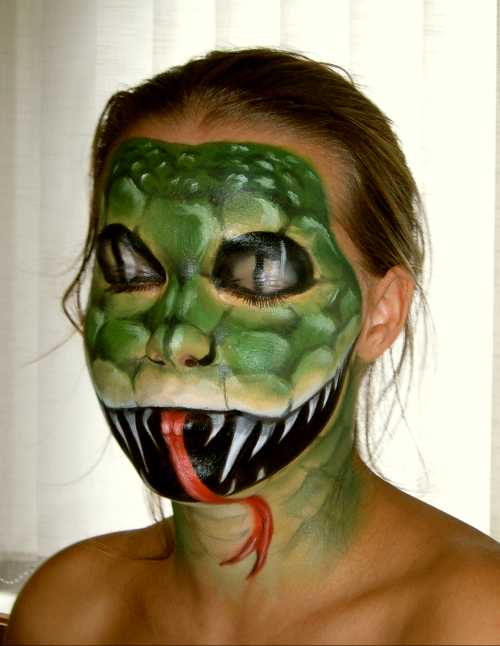
 If you are just getting started in body painting or face painting, one thing you may not have considered is how you are going to get all that paint off again!
While your client may like being a zombie or a tiger at a party, they may not want to go to work looking like one. In any case, they will want to get cleaned up before going to bed or doing pretty much anything else, and you will be expected to know how to remove the paint you put on them safely and painlessly.
Here are 7 quick tips for removing body paint from the skin, and also for staying clean and neat while you are working.
1. Check your paints and packaging.
Always use safe paints that have been made specifically for face painting and body painting. They should explicitly say that is what they are for. Read what they say, either on the label, or on the website, about how to clean them up. Some body paints are made to be cleaned with water; others may use a special kind of remover that you will have to buy. Be sure you are cleaning them off skin using the methods the packaging says to use.
2. Use warm water, sponges, and cloths.
If your body painting or face painting supplies say to use only water, or mild soap and water, then follow those instructions. Use warm water if possible to make cleanup nicer for your clients, and easier paint removal. Sponges (the same kind you use to apply body paints) and soft cloths are the best tools; you can use paper towels, but why not save the environment a bit and use something re-useable? And using the same types of sponges you use to put paint on will give you the best kinds of shapes for removing it as well.
3. Use non-allergenic, natural, safe skin soaps.
If you've chosen your face and body paints correctly, you have made sure they are meant for face painting and body painted and are almost guaranteed not to cause an allergic reaction. Be sure your clean up soaps follow the same standards. Natural bases like glycerin and castille are good; try to avoid perfumes, artificial colors, and chemicals. If it says 'natural' or 'hypo-allergenic' on the label, you may still want to check the ingredients, they may still include scents or high amounts of alcohol-stearates, which can cause sensitive skin to react.
4. Be careful around the eyes.
 Watch cleaning around the eyes especially - of course ask your client to close their eyes, and go slowly. Some makeup suppliers (Mehron, for example) carry special cleaners especially made for cleaning around eyes; you may want to try one of those. You could also look at makeup suppliers for smaller tools meant for cleaning around eyes. The skin around the eyes (and of course the eye itself) is more sensitive than the rest of the skin, so what works on the rest of the skin may not equally well around the eyes.
One good trick is to clean the other areas entirely first, and leave the eyes for very last - that way you will not be getting more paint near the eyes once they are clean, and will only have to clean them once. That way you can avoid repetitive cleaning (and irritation) of the eye area - as well as extra work on your part.
5. Baby Wipes are great, but use the right ones.
Baby wipes are great to have on hand, but remember they were formulated for wiping a very different area of the body than the face. This means they have probably not been tested for facial safety and irritation. I would recommend getting baby wipes that are 'natural,' but again, check the ingredients on the back. You want no fragrances if possible, and no dyes. Sometimes you can get them especially for 'sensitive skin,' again, read the labels. Then try them on your face to see how they work before using them on others.
6. Protect clothing while painting - and washing up.
Paints made for face painting and body painting should never stain the face, but the same can't be said for clothing. Even water based body paints can still stain clothing. Keep clothing away from the paint as it is being applied, of course - but you will want to watch it when you are cleaning up as well. Soaking paints with water and washing them off can be a drippy process, and colors are even more likely to get on clothes then than when painting. Consider using covering cloths while you are cleaning, even if you didn't when painting.
 7. And Last But Not Least: Don't Scrub!
Don't scrub the skin, even if the paints are not coming off properly. Scrubbing can cause bad reactions even if everything else is safe for skin. If your paint is not coming off quickly, be patient, let it soak a bit and try again, gently. Try using something else to clean such as baby wipes or a cloth with a little soap squirted directly on it. You may also want to take a look at the paint's instructions on cleaning up again - maybe you missed something on cleaning up. In any case, don't get frustrated and scrub! Your client will appreciate it.
So that's it - 7 best tips for cleaning up safely and easily after face painting or body painting. You may want to print these out as a reminder sheet to include in your painting supplies, that way if you have a cleaning problem, you can consult them quickly!
 Dragonmen, Alien Mermaids, Fantastic Fire Dancers, Barebacked Santas, and even a Painted Labrador Retriever; you can see all these and more at the fantastic body painting festivals now occurring annually around the world.
 Where: Nanaimo, British Columbia
 Where: Ashford, UK
 Did you ever want to be a cowboy? Maybe a rain forests? What about trading your skin in to become a seductive tigress ready to pounce on fresh meat? Well, whatever your adult fantasy may be, adult body painting may be the temporary and fun solution.
 Adult body painting is an art that uniquely transforms your everyday skin into a beautiful picturesque scene or life form. How? Glad you asked. By using safe, FDA approved make-up, oils, and other various paints and applying it directly to your skin. Any part of your skin. Oh yes, that's right, any part. Body painting artists are extremely professional and willing to cover any part of your body that you so desire, from head to toe. Or, if you can't make your mind up on which body part to paint, you can have your entire body brushed with a plethora of colors that completely disguises the real you underneath. Unless, of course, you really are Smokey the Bear. Which can be done. By method of airbrushing, painting, and drawing, your body can soon be entirely transformed into your fantasy.
 Body painting typically will last for a couple of days and can easily be removed. Because body painting is not permanent, you have the option to become many things over the course of time. The only thing that should be holding you up from getting painted is choosing what you want to be next!
 So you’ve decided you would like to learn how to paint faces. You want to see your painting bringing joy and delight to young children, maybe at your child’s birthday party. Or maybe you want to be a professional face painter.
 If you want to learn advanced face painting techniques, classes are one of the best ways of learning, especially if you want to improve your painting skills quickly.
 But sometimes, if you’ve already got some face painting skills, all you need is a little experience to help you build your confidence.
 As for the henna dyes, which Mehndi uses, there's a difference between the synthetic black henna, and the natural brown henna. The natural henna dye is completely safe when body painting, but the synthetic black henna dye could cause allergic reactions. You should have yourself patch tested before using these at body painting.
 There are several forms of body art. Body art can be temporary, for example, body painting, or permanent, such as shaping, dyeing, and scarification, tattooing, and piercing. This article will provide some insight into body art.
 Henna, is used as a temporary skin dye, in which different patterns and designs are applied to the body. The crushed leaves of the henna plant, when mixed with other natural ingredients, provides a thick, aromatic paste used for painting hands and feet. The olive green, dried out henna powder, mixed with such ingredients as black tea and coffee turns dark. When applied to the skin and left on overnight, it will harden and when pealed leaves a red tone to the skin.
 Scarification is much like tattooing, instead of placing a color into the skin with a tattoo needle, the color, or substance is placed into the wound or cut. Once the wound has healed, a permanent mark will remain on the skin
